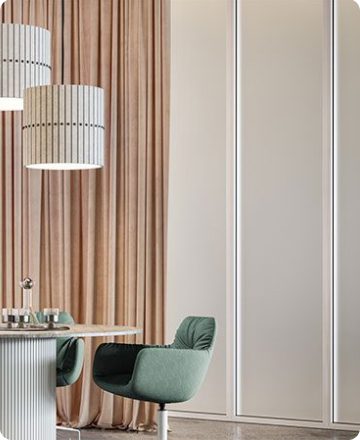
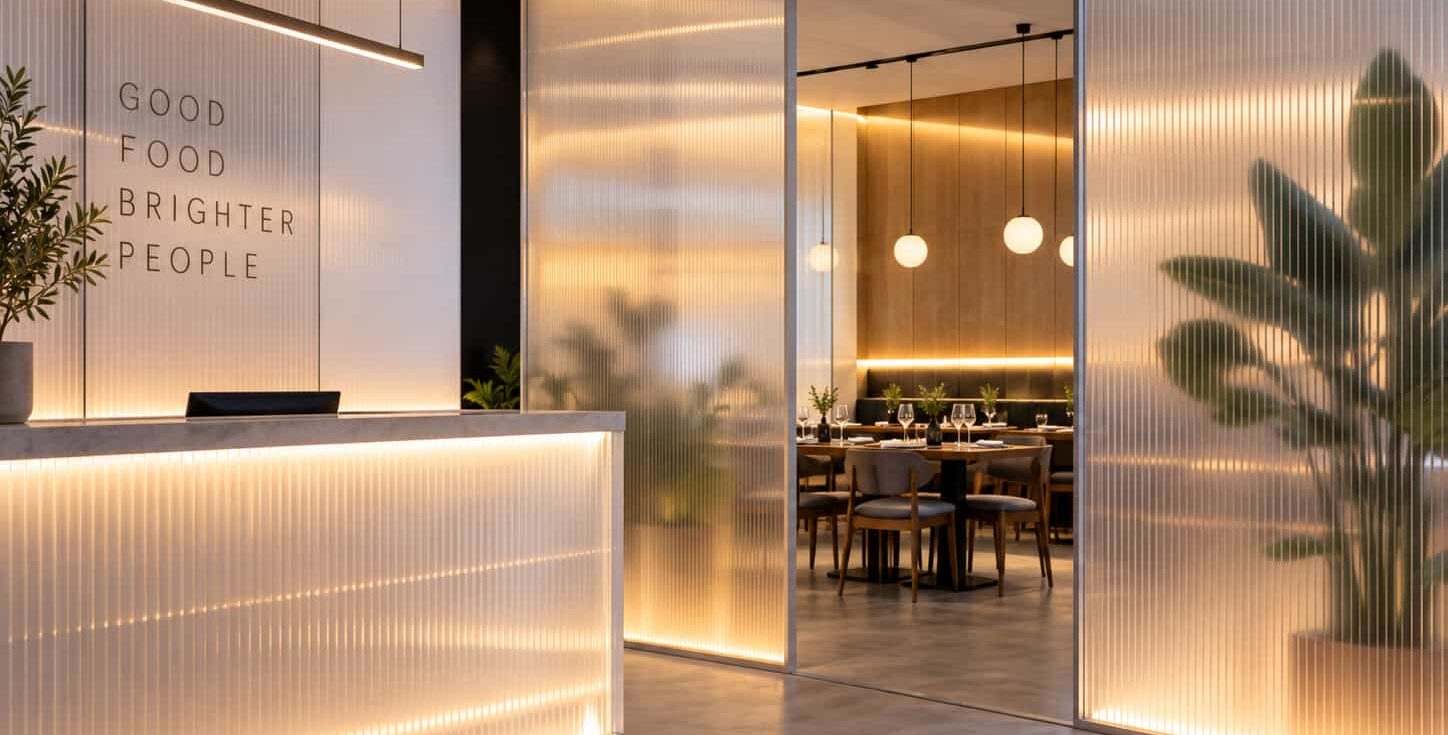

Translucent acrylic panels help designers control how light passes through an interior surface, creating diffused illumination, privacy and visual depth. Products such as PERSPEX® Solid & Translucent can be specified for lighting features, retail displays, partitions and decorative commercial interiors.
Key Takeaways
- Translucent acrylic diffuses light while reducing direct visibility through the panel.
- Different colours, opacities and finishes can create very different lighting effects.
- Translucent panels are suitable for backlit features, signage, partitions and decorative interiors.
- Acrylic can be cut and fabricated to suit custom architectural and lighting applications.
- Material selection should consider light transmission, diffusion, colour and the location of the light source.
What Are Translucent Acrylic Panels?
Translucent acrylic panels allow light to pass through while diffusing it across the surface. Unlike clear acrylic, which provides greater visibility through the sheet, translucent acrylic softens the light and obscures objects behind the panel.
This balance makes translucent acrylic useful where designers want illumination without complete transparency.
Depending on the selected colour and finish, panels can create anything from subtle ambient lighting to highly visible architectural features. They can also provide separation between spaces while allowing natural or artificial light to continue through an interior.
Why Use Translucent Acrylic in Interior Lighting?
Lighting is increasingly treated as part of the architecture rather than simply a functional addition to a room. Translucent acrylic gives designers a material that can interact directly with the light source.
When illuminated from behind, acrylic can distribute light across a broader surface and help create a cleaner visual effect than an exposed light source.
Common applications include:
- Backlit feature walls
- Reception counters
- Retail displays
- Illuminated signage
- Light boxes
- Decorative partitions
- Hospitality features
- Exhibition and point-of-sale installations
For purpose-designed illuminated applications, PERSPEX® Spectrum LED provides another option for designers working with LED lighting and fabricated acrylic features.
Light Diffusion, Opacity and Colour
Not all translucent acrylic behaves in the same way. The appearance of a finished installation depends on the relationship between the acrylic sheet, its colour and opacity, and the lighting behind or around it.
Light Diffusion
Diffusion determines how evenly light appears across the panel. Good diffusion can soften the appearance of individual light sources and create a more consistent illuminated surface.
Opacity
A more opaque sheet provides greater visual screening, while a more translucent material allows a greater impression of light and depth.
PERSPEX® Opal / White is one example of an acrylic option suited to projects where controlled light diffusion and a clean white appearance are required.
Colour
Coloured translucent acrylic can transform the tone of the light passing through it. This creates opportunities to integrate brand colours, atmosphere or decorative effects directly into an interior design.
The wider Perspex® acrylic range provides designers and specifiers with multiple colour, transparency and finish options for different commercial applications.
Where Can Translucent Acrylic Panels Be Used?
Translucent acrylic is particularly effective in commercial interiors where light, privacy and visual presentation need to work together.
Retail and Shopfitting
Retail environments can use illuminated acrylic panels to highlight merchandise, reinforce branding or create eye-catching point-of-sale displays.
Translucent surfaces can also conceal lighting components and structural elements while maintaining a polished customer-facing finish.
Workplace Interiors
In workplaces, translucent panels can help divide areas without completely blocking light. They may be incorporated into privacy screens, meeting spaces, reception areas and decorative installations.
Hospitality Interiors
Restaurants, bars and hotels often use lighting as part of the overall atmosphere. Acrylic panels can be incorporated into counters, wall features, signage and decorative elements to produce softer or coloured illumination.
Architectural Features
Within broader commercial interior applications, translucent acrylic can be fabricated into wall panels, partitions, ceiling features and other architectural elements where lighting contributes to the design.
Translucent Acrylic vs Clear and Opaque Acrylic
The right acrylic depends on what the project needs the material to achieve.
Clear acrylic is generally suited to applications where transparency and visibility are priorities.
Opaque acrylic blocks visibility and can provide strong solid colour.
Translucent acrylic sits between the two. It allows light to pass through while obscuring detail behind the sheet, making it particularly useful for lighting and privacy applications.
For designers, this means the material can act as both a surface finish and part of the lighting strategy.
Designing Backlit Acrylic Features
A successful illuminated acrylic installation requires more than choosing an attractive sheet colour.
Designers and fabricators should consider:
- The type and position of the light source
- Distance between LEDs and the acrylic surface
- Desired brightness and diffusion
- Acrylic colour and opacity
- Panel dimensions and thickness
- Fixing and installation details
- Whether edges will remain visible
- Fabrication requirements such as cutting, drilling or shaping
Testing materials with the intended lighting setup before full production can also help confirm the final appearance.
Custom Fabrication for Lighting and Interior Features
One of the advantages of acrylic is its fabrication flexibility. Panels can be cut and shaped to suit customised lighting installations, branded displays and architectural features.
This makes translucent acrylic particularly useful when a project requires something more specific than a standard rectangular sheet.
Mitchell Group works with architects, designers, shopfitters and fabricators to support material selection and custom panel requirements across commercial interiors.
Bring Light and Material Together in Commercial Interiors
Translucent acrylic panels give designers a versatile way to combine lighting, colour, privacy and architectural detailing within one material. From subtle illuminated partitions to high-impact retail displays, the right acrylic specification can turn lighting into an integral part of the interior design.
Learn more about Mitchell Group’s experience or contact the team to discuss acrylic materials and fabrication requirements for your next project.